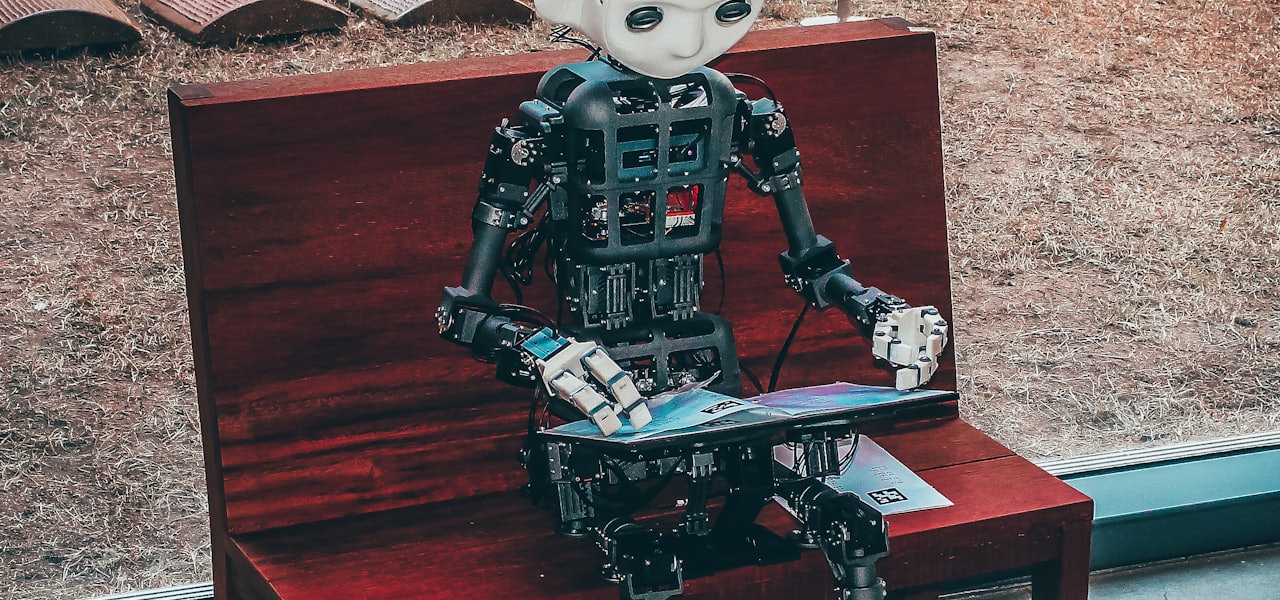
Electronics is a scientific and engineering discipline that studies and applies the principles of physics to design, create, and operate devices that manipulate electrons and other electrically charged particles. It is a subfield of physics and electrical engineering which uses active devices such as transistors, diodes, and integrated circuits to control and amplify the flow of electric current and to convert it from one form to another, such as from alternating current (AC) to direct current (DC) or from analog signals to digital signals. Electronic devices have significantly influenced the development of many aspects of modern society, such as telecommunications, entertainment, education, health care, industry, and security. The main driving force behind the advancement of electronics is the semiconductor industry, which continually produces ever-more sophisticated electronic devices and circuits in response to global demand. The semiconductor industry is one of the global economy's largest and most profitable industries, with annual revenues exceeding $481 billion in 2018. The electronics industry also encompasses other branches that rely on electronic devices and systems, such as e-commerce, which generated over $29 trillion in online sales in 2017. == History and development == Karl Ferdinand Braun's development of the crystal detector, the first semiconductor device, in 1874 and the identification of the electron in 1897 by Sir Joseph John Thomson, along with the subsequent invention of the vacuum tube which could amplify and rectify small electrical signals, inaugurated the field of electronics and the electron age. Practical applications started with the invention of the diode by Ambrose Fleming and the triode by Lee De Forest in the early 1900s, which made the detection of small electrical voltages, such as radio signals from a radio antenna, practicable. Vacuum tubes (thermionic valves) were the first active electronic components which controlled current flow by influencing the flow of individual electrons, and enabled the construction of equipment that used current amplification and rectification to give us radio, television, radar, long-distance telephony and much more. The early growth of electronics was rapid, and by the 1920s, commercial radio broadcasting and telecommunications were becoming widespread and electronic amplifiers were being used in such diverse applications as long-distance telephony and the music recording industry. The next big technological step took several decades to appear, when the first working point-contact transistor was invented by John Bardeen and Walter Houser Brattain at Bell Labs in 1947. However, vacuum tubes continued to play a leading role in the field of microwave and high power transmission as well as television receivers until the middle of the 1980s. Since then, solid-state devices have all but completely taken over. Vacuum tubes are still used in some specialist applications such as high power RF amplifiers, cathode-ray tubes, specialist audio equipment, guitar amplifiers and some microwave devices. In April 1955, the IBM 608 was the first IBM product to use transistor circuits without any vacuum tubes and is believed to be the first all-transistorized calculator to be manufactured for the commercial market. The 608 contained more than 3,000 germanium transistors. Thomas J. Watson Jr. ordered all future IBM products to use transistors in their design. From that time on, transistors were almost exclusively used for computer logic circuits and peripheral devices. However, early junction transistors were relatively bulky devices that were difficult to manufacture on a mass-production basis, which limited them to a number of specialised applications. The MOSFET was invented at Bell Labs between 1955 and 1960. It was the first truly compact transistor that could be miniaturised and mass-produced for a wide range of uses. Its advantages include high scalability, affordability, low power consumption, and high density. It revolutionized the electronics industry, becoming the most widely used electronic device in the world. The MOSFET is the basic element in most modern electronic equipment. As the complexity of circuits grew, problems arose. One problem was the size of the circuit. A complex circuit like a computer was dependent on speed. If the components were large, the wires interconnecting them must be long. The electric signals took time to go through the circuit, thus slowing the computer. The invention of the integrated circuit by Jack Kilby and Robert Noyce solved this problem by making all the components and the chip out of the same block (monolith) of semiconductor material. The circuits could be made smaller, and the manufacturing process could be automated. This led to the idea of integrating all components on a single-crystal silicon wafer, which led to small-scale integration (SSI) in the early 1960s, and then medium-scale integration (MSI) in the late 1960s, followed by VLSI. In 2008, billion-transistor processors became commercially available. == Subfields == == Devices and components == An electronic component is any component, either active or passive, in an electronic system or electronic device. Components are connected together, usually by being soldered to a printed circuit board (PCB), to create an electronic circuit with a particular function. Components may be packaged singly or in more complex groups as integrated circuits. Passive electronic components are capacitors, inductors, resistors, whilst active components are such as semiconductor devices; transistors and thyristors, which control current flow at electron level. == Types of circuits == Electronic circuit functions can be divided into two function groups: analog and digital. A particular device may consist of circuitry that has either or a mix of the two types. Analog circuits are becoming less common, as many of their functions are being digitized. === Analog circuits === Analog circuits use a continuous range of voltage or current for signal processing, as opposed to the discrete levels used in digital circuits. Analog circuits were common throughout electronic devices in the early years, in devices such as radio receivers and transmitters. Analog electronic computers were valuable for solving problems with continuous variables until digital processing advanced. As semiconductor technology developed, many of the functions of analog circuits were taken over by digital circuits, and modern circuits that are entirely analog are less common; their functions being replaced by hybrid approach which, for instance, uses analog circuits at the front end of a device receiving an analog signal, and then use digital processing using microprocessor techniques thereafter. Sometimes it may be difficult to classify some circuits that have elements of both linear and non-linear operation. An example is the voltage comparator, which receives a continuous range of voltage but only outputs one of two levels, as in a digital circuit. Similarly, an overdriven transistor amplifier can take on the characteristics of a controlled switch, having essentially two levels of output. Analog circuits are still widely used for signal amplification, such as in the entertainment industry, and conditioning signals from analog sensors, such as in industrial measurement and control. === Digital circuits === Digital circuits are electric circuits based on discrete voltage levels. Digital circuits use Boolean algebra and are the basis of all digital computers and microprocessor devices. They range from simple logic gates to large integrated circuits, employing millions of such gates. Digital circuits use a binary system with two voltage levels labelled 0 and 1 to indicate logical status. Often logic 0 will be a lower voltage and referred to as Low while logic 1 is referred to as High. However, some systems use the reverse definition (0 is High) or are current based. Quite often, the logic designer may reverse these definitions from one circuit to the next as they see fit to facilitate their design. The definition of the levels as 0 or 1 is arbitrary. Ternary (with three states) logic has been studied, and some prototype computers made, but have not gained any significant practical acceptance. Universally, computers and digital signal processors are constructed with digital logic circuits using transistors such as MOSFETs in the electronic logic gates to generate binary states. Logic gates Adders Flip-flops Counters Registers Multiplexers Schmitt triggers Highly integrated devices: Memory chip Microprocessors Microcontrollers Application-specific integrated circuit (ASIC) Digital signal processor (DSP) Field-programmable gate array (FPGA) Field-programmable analog array (FPAA) System on chip (SOC) == Design == Electronic systems design deals with the multi-disciplinary design issues of complex electronic devices and systems, such as mob
Tresorit
Tresorit is a Swiss company providing end-to-end encrypted cloud storage and secure content collaboration services. Founded in 2011, the company primarily serves businesses and organizations with elevated data protection and compliance requirements. Since 2021, Tresorit has been part of Swiss Post's digital business services, which, under the name 'Swiss Post Digital' offer secure communication platforms and connectable software solutions for SMEs, public authorities, and the healthcare sector, among others. == History == Tresorit was founded in 2011 by Hungarian software developers Istvan Lam, Szilveszter Szebeni and Gyorgy Szilagyi with the aim of providing a secure alternative to traditional cloud storage solutions. The company developed a cloud collaboration platform based on client-side end-to-end encryption and a zero-knowledge architecture. In its early years, Tresorit gained attention through a public security challenge inviting researchers to attempt to compromise its encryption system. The initiative received coverage in technology and cybersecurity media. The company initially positioned itself as a secure alternative to conventional cloud storage services and gradually expanded its offering toward enterprise-focused collaboration tools. In 2021, Swiss Post Communications Services acquired a majority stake in Tresorit. The company is now part of Swiss Post, and continues to operate independently within Swiss Post’s digital division, while benefiting from the broader infrastructure and institutional framework of its parent organization. Tresorit has offices in Zurich, Munich, and Budapest. == Products and Services == Tresorit provides a cloud-based platform for secure file storage and collaboration. Its services include encrypted file sharing, email encryption, electronic signatures, and encrypted data rooms for managing sensitive documents and workflows. The platform is available on Windows, macOS, Linux, Android, and iOS. == Technology == Tresorit uses client-side end-to-end encryption based on a zero-knowledge model. Files are encrypted on the user’s device before being uploaded to company servers. According to the company, encryption keys remain under user control, meaning that Tresorit and third parties cannot access the content of stored files. == Security challenge == Between 2013 and 2014, Tresorit organized a public challenge inviting security researchers to attempt to compromise the service's encryption implementation. The challenge received coverage in technology and cybersecurity media. == Acquisition by Swiss Post == In 2021, Swiss Post Communications Services acquired a majority stake in Tresorit as part of Swiss Post’s broader digital services strategy. The company is now part of Swiss Post. == Reception == Tresorit has been covered by international technology and business publications in the context of secure cloud storage and encrypted collaboration services. TechCrunch described the company as an early European provider of end-to-end encrypted cloud services, while The New York Times included it in discussions of secure file-sharing tools. Other publications such as TechRadar and ITPro have reviewed Tresorit in the context of enterprise security and confidential data handling.
SeaTable
SeaTable is a no-code platform that allows users to develop and implement business processes. The cloud collaboration service SeaTable is marketed by the GmbH of the same name with headquarters in Mainz and additional offices in Berlin and Beijing, and developed by the same company as Seafile. == History == SeaTable is a collaborative database and low-code application platform developed as part of a joint venture between Seafile Ltd., a software company based in Guangzhou, China, and SeaTable GmbH, a German firm headquartered in Mainz. Founded in 2020, the project represents the international expansion of Seafile, a Chinese developer originally known for its file synchronization and sharing software. While SeaTable's cloud services and European client operations are managed by the German entity, the platform itself is developed in China by Seafile's engineering team. This cross-border structure, described by TechCrunch as an “unconventional path” for a Chinese startup expanding abroad, reflects Seafile's effort to maintain its product development in China while addressing growing scrutiny in Western markets over data governance and corporate control. In 2021, an innovation project led by the Cyber Innovation Hub at the IT School of the German Armed Forces started to evaluate the possibilities of a large-scale deployment at the German Armed Forces. The evaluation project is currently still ongoing. In 2022, SeaTable is optimizing its database backend to allow millions of records within one base in the future. The focus of development is increasingly on automation and visualization. In 2025, SeaTable introduced AI-powered automations with version 6. The update enabled the integration of large language models (LLMs) for text analysis and automated decision-making. SeaTable operates a self-hosted LLM on servers provided by Hetzner (Germany), while self-hosted deployments can connect to any compatible model. == Features == SeaTable combines the traditional capabilities of a spreadsheet such as Excel and supplements them with a wide range of functions for process automation and visualization as well as a fully comprehensive API. SeaTable is not a pure cloud solution, but can alternatively be installed on a private server and operated completely autonomously. In this way, the owner retains full control over their own data. The installation is done via Docker on a Linux server. == Security and privacy == While most no-code platforms exist only as SaaS solutions, SeaTable describes itself as a data-sparse European solution. While initially the SeaTable Cloud was hosted on Amazon AWS, the move to the German data centers of Swiss provider Exoscale then took place in May 2021. This was followed by the replacement of the Freshdesk cloud ticketing system with a self-hosted Zammad instance, and since April 2022 SeaTable has completely dispensed with all tracking cookies on its website.
Excalidraw
Excalidraw is an open-source, web-based virtual whiteboard and diagramming application. It is used to create diagrams, wireframes, and sketches within a web browser without requiring account registration. The software features a characteristic hand-drawn visual style and supports real-time multi-user collaboration using client-side end-to-end encryption. Excalidraw is released under the MIT License and is maintained by Excalidraw s.r.o., a company based in Brno, Czech Republic. == History == Excalidraw was created on 1 January 2020 by Christopher Chedeau, a software engineer at Meta Platforms. Chedeau, who previously co-created React Native and Prettier, initially developed the application as a personal project before registering the domain on 3 January 2020. Within its first months, the project attracted open-source contributors who assisted in expanding its features and rewriting the codebase into TypeScript and React. By early 2021, day-to-day operations moved to Czech developers David Luzar and Milos Vetesnik. In May 2021, the team incorporated Excalidraw s.r.o. in Brno and launched a commercial cloud-based version named Excalidraw+ to fund the open-source project's development. By May 2026, the main open-source repository on GitHub had accumulated over 123,000 stars. == Features and architecture == The application provides an infinite canvas for geometric shapes, lines, arrows, text, and freehand drawing. Its visual presentation relies on Rough.js, a JavaScript graphics library that alters standard vector paths to mimic irregular, hand-drawn lines. Excalidraw operates as a Progressive web application (PWA), allowing local installation and offline usage, saving data natively to local browser storage. Files use a native, JSON-based extension format (.excalidraw), and canvases can be exported to PNG or SVG formats. Real-time collaboration sessions are executed using Socket.IO via a relay server. Data transmission uses the browser's native Web Cryptography API to achieve end-to-end encryption. A symmetric AES key is generated on the client side and appended to the sharing URL as a fragment identifier (following the # character). Because web browsers do not transmit URL fragments to HTTP servers, the data remains unreadable to the distribution server. == Ecosystem == Excalidraw is distributed as an npm package, allowing third-party developers to embed the whiteboard component directly into external React web applications. Community-developed extensions integrate the application's file format into text editors and note-taking systems, including Visual Studio Code and Obsidian. The platform also has native integrations in commercial platforms such as Notion and HackerRank. == Reception == Google's developer relations team published a technical case study on Excalidraw as a reference implementation for Progressive Web Apps. The analysis highlighted the software's adoption of advanced web platform capabilities, specifically its utilization of the File System Access API and native Clipboard API to replicate desktop software behavior within a web browser environment.
Crucible (software)
Crucible is a collaborative code review application by Australian software company Atlassian. Like other Atlassian products, Crucible is a Web-based application primarily aimed at enterprise, and certain features that enable peer review of a codebase may be considered enterprise social software. Crucible is particularly tailored to remote workers, and facilitates asynchronous review and commenting on code. Crucible also integrates with popular source control tools, such as Git and Subversion. Crucible is not open source, but customers are allowed to view and modify the code for their own use.
Tail latency
Tail latency is a term used to describe the high-percentile response times seen in a system. This is usually measured at the 95th, 99th, or 99.9th percentile, not the average latency. In distributed systems, cloud computing, and large-scale web services, even a small number of slow requests can make the user experience and system performance much worse. Tail latency often happens because of things like resource contention, network variability, garbage collection pauses, and hardware heterogeneity. A major problem in system design is managing tail latency, because lowering average latency doesn't always make the worst-case performance better. To lessen its effects, people often use techniques like request hedging, replication, load balancing, and adaptive timeouts. In latency-sensitive applications like search engines, financial systems, and real-time services, where service-level objectives (SLOs) are often based on high-percentile latencies, it is especially important to understand and improve tail latency.
Sahara Net
Sahara Net is an information and communications technology provider (ICT) serving the Saudi market, the company has rapidly grown since 1989 to offer various complementary services such as connectivity, internet, hosting, cloud, optimization, cyber security, and managed services. == History == Sahara Net is a Saudi Joint Stock Company (JSC) and its history goes back to 1989 when Sahara Net established the 1st Saudi Bulletin Board Service (BBS) in the Kingdom. During this period, it operated as a hub for email exchange in the FidoNet network. And in 1994 Sahara Net started offering Internet connectivity and other related services like internet email, web design, web hosting, and Domain name registry services. These services made the first ISP in Saudi Arabia before the official licensing in 1998, when the Saudi Internet market was regulated and Sahara Net received Internet Service Provider (ISP) license and was appointed as the official Local Internet Registry (LIR) in the Kingdom of Saudi Arabia. == Today == The company grew over these years to become one of the main ICTs in the Saudi Arabian market, extending network coverage to all major cities in Saudi Arabia, and offering various connectivity options to business as well as home users. In 2009, the company was partially acquired by Telindus (the ICT investment arm of Belgacom), the famous telecom operator in Belgium and Europe. Then, in 2014, the company was fully acquired by its original founders. Recently, Sahara Net was converted from an LLC to a JSC with over 1200 shareholders by a capital raise (original founders still control 70% of the shares).